Beyond Borders, Closer to Divine: Your Ultimate Nepal Tour & Pashupatinath Yatra from Delhi with Madhu Tourism
Nepal, the land of the majestic Himalayas, ancient temples, and serene landscapes, holds a special place in the hearts of Indian travelers. For centuries, it has been a sacred pilgrimage destination, a hub for cultural exchange, and an adventurer’s paradise, all within comfortable reach. If you’ve been dreaming of a spiritual journey, a refreshing family vacation, or an exciting group expedition that blends devotion with breathtaking beauty, a Nepal tour from India is your perfect answer. Madhu Tourism, your trusted tour operator in Gorakhpur, brings you an unparalleled opportunity to explore the Himalayan nation, beginning with the revered Pashupatinath Yatra from Delhi.
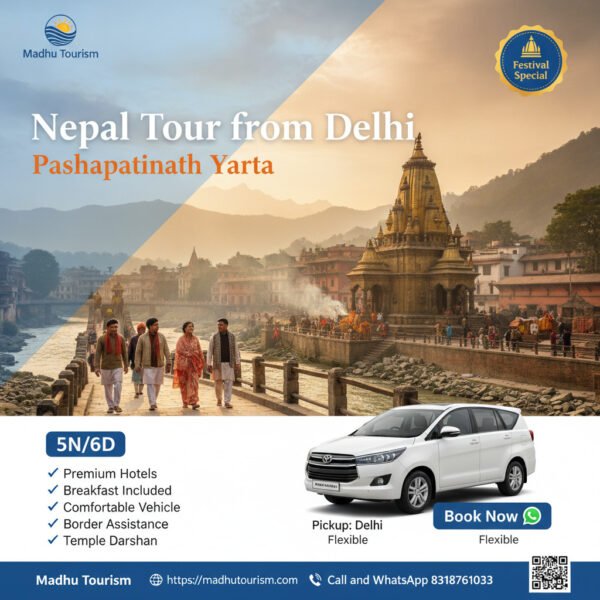
Imagine stepping into a world where ancient traditions thrive amidst stunning natural grandeur, where the air hums with spiritual energy, and every corner tells a story. Nepal offers just that, and much more. It’s a journey that promises not just sights, but profound experiences, especially for those seeking the blessings of Lord Shiva at the Pashupatinath Temple. Madhu Tourism understands the nuances of Indian travel preferences, from comfortable logistics to authentic experiences, ensuring your Nepal tour package from Gorakhpur or any other major Indian city is seamless and memorable.
Why Nepal is the Perfect Destination for Indian Travelers
Nepal and India share an unbreakable bond, woven with threads of culture, religion, and history. This deep connection makes Nepal an ideal choice for Indian tourists, pilgrims, and families alike:
- Visa-Free Travel: For Indian citizens, traveling to Nepal is as easy as traveling to another state. No visa is required, simplifying planning and reducing hassle. You just need a valid photo ID (Aadhaar Card, Voter ID, or Passport).
- Cultural & Religious Affinity: From shared spiritual beliefs, particularly the reverence for Lord Shiva, to similar customs and festivals, Indians feel a profound connection with Nepal. The cultural landscape is familiar yet distinctly unique.
- Proximity & Accessibility: Nepal is geographically close to India, making travel convenient and cost-effective. Whether by air, road, or rail (up to the border), reaching Nepal is straightforward from various Indian cities, including Delhi, Gorakhpur, and even a bustling metropolis like Mumbai.
- Affordability: Compared to many international destinations, a Nepal tour offers incredible value for money, allowing you to experience rich culture and natural beauty without breaking the bank.
- Warm Hospitality: Nepalese people are known for their warmth, friendliness, and hospitality, making every visitor feel welcome and at home.
- Diverse Experiences: From spiritual solace to thrilling adventures, serene nature escapes to vibrant city life, Nepal offers a spectrum of experiences catering to every taste.
The Spiritual Heartbeat: Pashupatinath Yatra
No Nepal tour from India, especially for pilgrims, is complete without a visit to the sacred Pashupatinath Temple. Situated on the banks of the holy Bagmati River in Kathmandu, this UNESCO World Heritage Site is one of the most significant Hindu temples in the world, dedicated to Lord Pashupatinath (an incarnation of Shiva).
A Glimpse into Divinity and History
The origins of Pashupatinath Temple are steeped in legend and ancient history, dating back to 400 AD. The main temple, a masterpiece of Nepalese pagoda-style architecture, features a gilded roof, four silver doors, and intricate wooden carvings. Within its sanctum lies the sacred Lingam of Lord Pashupatinath, a five-faced Mukhalingam, each face representing a different aspect of Shiva.
- Tatpurusha: Facing east, representing the manifestation of Shiva as the supreme being.
- Vamadeva (Uma Maheswara): Facing north, representing the left aspect of Shiva, consort of Uma.
- Aghora: Facing west, representing the destructive and transformative aspect of Shiva.
- Sadyojata: Facing south, representing the creator aspect of Shiva.
- Ishana: The fifth face, invisible and facing upwards, represents the supreme, all-pervading consciousness of Shiva.
The temple complex is not just a single temple but a sprawling collection of temples, ashrams, images, and inscriptions. Its spiritual ambiance is palpable, drawing devotees from across the globe seeking divine blessings and liberation.
The Darshan Experience and Rituals
Performing Darshan at Pashupatinath is a deeply moving experience. The complex comes alive with the sounds of chanting, bells, and devotees offering prayers. As an Indian pilgrim, you’ll feel an immediate connection to the rituals and the devout atmosphere.
- Main Temple Darshan: Access to the inner sanctum of the main temple is generally restricted to Hindus only. Foreigners (non-Hindus) can observe the temple from the eastern bank of the Bagmati River.
- Evening Aarati: The Bagmati River bank comes alive every evening with a spectacular Aarati ceremony. Priests perform elaborate rituals with lamps, incense, and devotional music, creating an enchanting and spiritually uplifting experience that is open to all.
- Sadhus and Yogis: The temple grounds are home to numerous Sadhus, ascetics, and yogis, particularly during Shivaratri. Their vibrant attire and spiritual practices add to the mystical aura of the place.
- Cremation Ghats: Adjacent to the temple, the Aryaghat on the Bagmati River serves as a revered cremation ground. Witnessing the funeral pyres, while somber, offers a profound perspective on the cycle of life and death, an integral part of Hindu philosophy.
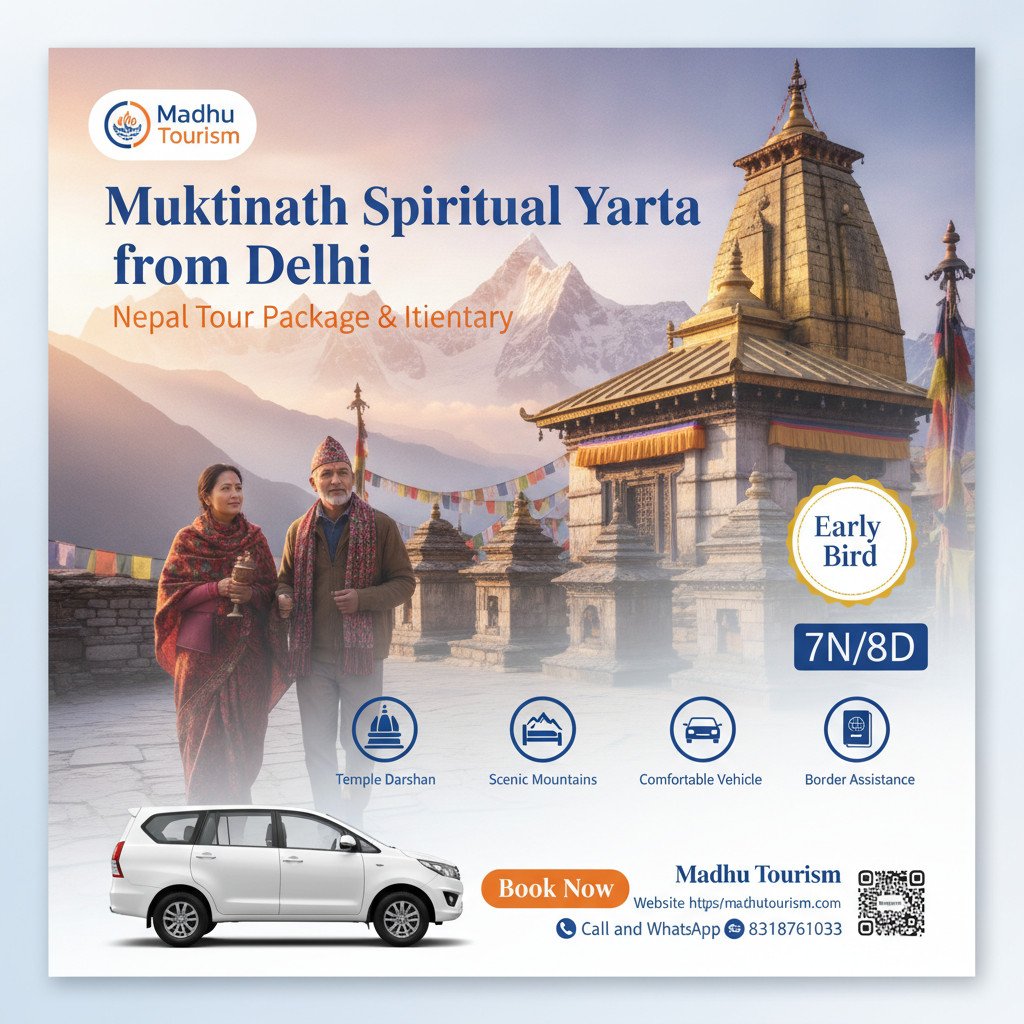
Madhu Tourism ensures your Pashupatinath Yatra from Delhi is meticulously planned, providing comfortable transport, knowledgeable guides, and ample time for Darshan and experiencing the temple’s profound spirituality.
Beyond Pashupatinath: Exploring Kathmandu Valley’s Treasures
Kathmandu, the vibrant capital of Nepal, is a living museum, teeming with ancient palaces, sacred stupas, and bustling markets. Your Nepal tour from India should definitely include exploring these gems:
Boudhanath Stupa: A Beacon of Buddhist Peace
One of the largest stupas in the world, Boudhanath is a sacred site for Buddhists and a UNESCO World Heritage site. Its colossal mandala makes it an awe-inspiring spectacle. The air here is filled with the fragrance of incense, the gentle hum of chanting, and the rhythmic turning of prayer wheels by devotees. It’s a place of profound tranquility and cultural immersion, surrounded by monasteries and shops selling Tibetan artifacts.
Swayambhunath Stupa (Monkey Temple): Panoramic Views and Ancient Wisdom
Perched atop a hill, Swayambhunath offers not only spiritual solace but also panoramic views of the entire Kathmandu Valley. This ancient stupa is adorned with the watchful eyes of Buddha, symbolizing wisdom and compassion. Known affectionately as the “Monkey Temple” due to the hundreds of holy monkeys that reside there, it’s a harmonious blend of Hindu and Buddhist traditions, with shrines and temples dedicated to both faiths.
Kathmandu Durbar Square: Royalty and Heritage
A UNESCO World Heritage site, Kathmandu Durbar Square is a historical marvel, surrounded by ancient palaces, courtyards, and temples. Once the seat of the Malla and Shah kings, it showcases exquisite Nepalese architecture and craftsmanship. Highlights include Hanuman Dhoka Palace, Kumari Ghar (home of the Living Goddess), and various pagoda-style temples. Though partially damaged by the 2015 earthquake, its grandeur and historical significance remain intact.
Patan Durbar Square: The City of Fine Arts
Just across the Bagmati River from Kathmandu lies Patan, renowned for its rich artistic heritage and exquisite metalwork. Patan Durbar Square, another UNESCO site, is a mesmerizing ensemble of palaces, temples, and courtyards, showcasing the finest examples of Newari architecture. Don’t miss the Krishna Mandir, Golden Temple, and the Patan Museum.
Bhaktapur Durbar Square: The Devotees’ City
Known as the “City of Devotees,” Bhaktapur is arguably the most well-preserved of the three Durbar Squares, offering a step back in time. Its narrow alleys, traditional houses, and stunning temples transport you to a bygone era. Key attractions include the 55 Window Palace, Nyatapola Temple, Dattatreya Temple, and the Potter’s Square, where you can witness local artisans at work.
The Serene Beauty of Pokhara: Nature’s and Adventure’s Embrace
After the cultural immersion of Kathmandu, a visit to Pokhara, nestled in the lap of the Annapurna range, is a must. This picturesque valley is renowned for its tranquil lakes, stunning mountain views, and adventure activities, making it an essential part of any comprehensive Nepal tour from India.
Phewa Lake: The Jewel of Pokhara
The second-largest lake in Nepal, Phewa Lake is the heart of Pokhara. Enjoy a peaceful boat ride on its calm waters, with the reflection of the Machhapuchhre (Fishtail) mountain shimmering on its surface. Visit the Tal Barahi Temple, a two-story pagoda temple located on a small island in the lake, adding to the serene ambiance.
Adventure Awaits: Thrills in the Mountains
Pokhara is Nepal’s adventure capital. For adrenaline junkies, options abound:
- Paragliding: Soar above the valley with breathtaking views of the Himalayas and lakes below.
- Zip-lining: Experience one of the longest and steepest zip-lines in the world.
- Bungee Jumping: For the ultimate thrill, take a leap from a dizzying height.
- Trekking: Pokhara is the gateway to several popular trekking routes in the Annapurna region, offering treks for all fitness levels.
Other Must-Visit Spots in Pokhara
- Devi’s Fall: A unique waterfall that disappears underground.
- Gupteshwor Cave: A sacred cave with a shrine dedicated to Lord Shiva, located near Devi’s Fall.
- World Peace Pagoda (Shanti Stupa): Perched on a hilltop, offering spectacular sunrise/sunset views and panoramic vistas of Pokhara Valley, Phewa Lake, and the Annapurna range.
- Sarangkot: Famous for its incredible sunrise views over the Himalayas, including Annapurna, Dhaulagiri, and Machhapuchhre.
Wildlife Encounters in Chitwan National Park
For those seeking a touch of wilderness, Chitwan National Park, another UNESCO World Heritage site, offers a fascinating contrast to the spiritual and mountainous regions. Located in the Terai lowlands, it’s home to a rich diversity of wildlife, including the endangered one-horned rhinoceros, Bengal tigers, sloth bears, and various bird species. A jungle safari here (jeep, elephant, or canoe) is an unforgettable experience, allowing you to connect with nature’s raw beauty. Madhu Tourism can seamlessly integrate this wildlife adventure into your comprehensive Nepal tour from India.
Planning Your Divine Journey: Nepal Tour from India
Embarking on a Nepal tour from India is made easy with Madhu Tourism. We understand the best routes, the most comfortable travel options, and how to create a package that caters to your specific needs.
From Delhi: Your Gateway to Nepal
Delhi, as a major metropolitan hub, offers excellent connectivity to Nepal, particularly Kathmandu:
- By Air: The quickest and most convenient way to reach Kathmandu from Delhi is by direct flight. Several airlines operate daily flights, with a journey time of approximately 1 hour and 45 minutes. This is ideal for those looking to maximize their time in Nepal and is a popular choice for the Pashupatinath Yatra from Delhi.
- By Road & Rail (via Gorakhpur): While direct road travel from Delhi to Kathmandu is long, many prefer a multi-modal journey. You can take a train or bus from Delhi to Gorakhpur (a major railway junction close to the Nepal border). From Gorakhpur, it’s a short drive to the Sunauli border, and then onward transport into Nepal.
The Gorakhpur Advantage: A Seamless Start for Your Nepal Tour
For travelers from Uttar Pradesh and surrounding regions, and indeed for many across India seeking a budget-friendly and culturally immersive road journey, Gorakhpur serves as an excellent starting point. Madhu Tourism, being based in Gorakhpur, specializes in making this leg of your journey effortless:
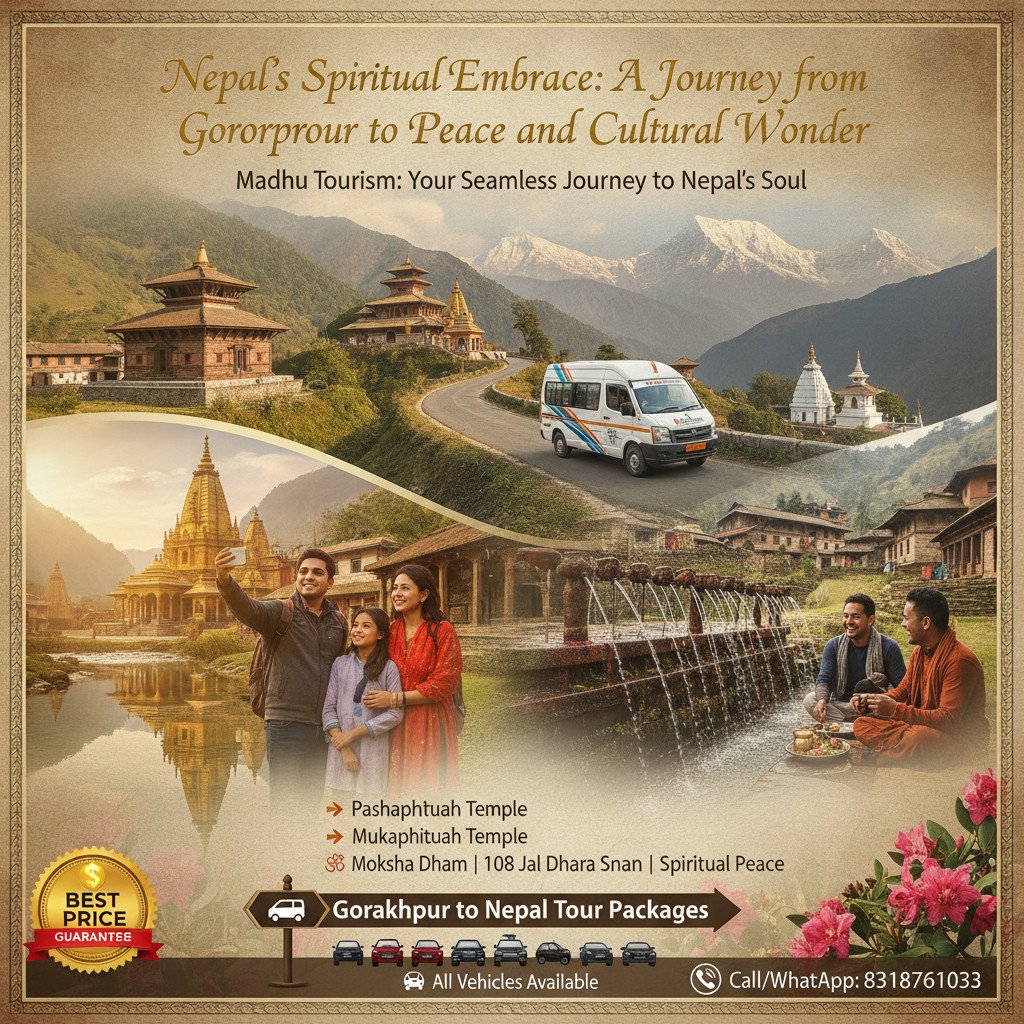
- Proximity to Border: Gorakhpur is merely 90 km from the Sunauli border, one of the busiest and most accessible land crossings into Nepal. This makes a Nepal tour package from Gorakhpur incredibly convenient.
- Madhu Tourism Expertise: Our local presence means we have unparalleled expertise in border formalities, local transport options, and arranging seamless transfers from Gorakhpur directly into Nepal. We manage everything from comfortable vehicles to experienced drivers and guides, ensuring a smooth transition into the Himalayan nation.
- Cost-Effectiveness: Starting your journey from Gorakhpur can often be more economical than flying directly, especially for families and group travelers. We design tailored Nepal tour packages from Gorakhpur that optimize both cost and comfort.
Tailored Packages for Every Indian Traveler
Madhu Tourism doesn’t just offer standard itineraries; we craft experiences. Whether you’re a devout pilgrim focused solely on the Pashupatinath Yatra from Delhi, a family looking for a mix of culture and nature, or a group of friends seeking adventure, we have a package for you. We also cater to travelers from other major Indian cities. For instance, if you’re looking for a comprehensive Nepal tour package from Mumbai, we can arrange flights to Delhi or directly to Kathmandu, and then build your itinerary around your interests, ensuring a hassle-free journey from start to finish.
Essential Travel Tips for Indian Tourists to Nepal
To ensure your Nepal tour from India is as enjoyable and smooth as possible, here are some practical tips:
- Documentation: Indian citizens need a valid photo ID such as an Aadhaar Card, Voter ID Card, or Indian Passport. A driving license is generally not accepted for entry. Minors should ideally carry their passport or a birth certificate along with school ID.
- Currency: The Nepalese Rupee (NPR) is the local currency. Indian Rupees (INR) are widely accepted, especially 100 and 500 Rupee notes. However, it’s advisable to exchange some currency for smaller transactions. Note that 2000 INR notes are not legally accepted in Nepal. ATMs are available in major cities.
- Language: Nepali is the official language, but Hindi is widely understood, especially in tourist areas and border regions. English is also commonly spoken by people in the tourism industry.
- Food: Nepalese cuisine is delicious and often similar to North Indian food, with staples like dal bhat (lentils and rice), momos, and various curries. Pure vegetarian and Jain food options are readily available, and Madhu Tourism ensures your dietary preferences are catered to.
- Connectivity: Indian SIM cards generally do not work in Nepal. You can buy a local Nepalese SIM card upon arrival (requires a passport-sized photo and a copy of your ID) or rely on Wi-Fi at hotels and cafes.
- Health & Safety: Nepal is generally safe for tourists. It’s wise to carry basic medications, stay hydrated, and be mindful of your surroundings, especially in crowded areas. For high-altitude regions, consult your doctor beforehand.
- Best Time to Visit: The best time to visit Nepal is during the autumn (September to November) and spring (March to May) seasons. The weather is pleasant, and skies are clear, offering stunning mountain views. Winter (December to February) can be cold but offers clear skies, while monsoon (June to August) brings heavy rainfall.
- What to Pack: Pack comfortable walking shoes, layers of clothing (especially if visiting mountainous regions), rain gear (if traveling during monsoon), sun protection, and any personal medications. For spiritual sites, respectful attire (covering shoulders and knees) is recommended.
Why Choose Madhu Tourism for Your Nepal Tour from India?
Embarking on a journey, especially a spiritual one like the Pashupatinath Yatra from Delhi, requires meticulous planning and reliable support. Madhu Tourism is committed to making your Nepal tour from India an enriching and hassle-free experience.
- Expertise and Experience: With years of experience organizing tours to Nepal, we possess in-depth knowledge of the region, its culture, logistics, and hidden gems. We understand the pulse of Indian travelers and their unique needs.
- Customized Packages: We believe every traveler is unique. Our itineraries are flexible and can be customized to suit your budget, interests, and duration of travel, whether you’re looking for a short pilgrimage or an extended adventure.
- Seamless Logistics: From arranging comfortable transportation (flights, buses, private vehicles) and accommodation to managing border formalities and local transfers, we handle every detail. Our strong network, especially for a Nepal tour package from Gorakhpur, ensures smooth transitions.
- Knowledgeable Guides: Our experienced and friendly guides are not just navigators; they are storytellers who bring Nepal’s history, culture, and spirituality to life, enhancing your understanding and appreciation of each site.
- Safety and Comfort: Your safety and comfort are our top priorities. We partner with trusted service providers, maintain well-maintained vehicles, and ensure comfortable accommodations, giving you peace of mind throughout your journey.
- 24/7 Support: From the moment you inquire until you return home, our team is available to assist you, addressing any concerns and ensuring a worry-free travel experience.
- Authentic Experiences: We strive to offer more than just sightseeing. Our tours are designed to provide authentic cultural immersion, allowing you to connect with local traditions, taste regional cuisine, and create lasting memories.
Whether it’s the divine call of Pashupatinath from Delhi, the serene beauty of Pokhara, or the thrill of Chitwan, your dream Nepal tour from India awaits. Madhu Tourism is here to turn that dream into a beautiful reality, ensuring a journey filled with spiritual grace, cultural discovery, and unforgettable moments.
Don’t just dream about the Himalayas; experience them. Connect with Madhu Tourism today, your trusted partner for an extraordinary adventure to Nepal!
FAQs Section
Here are some frequently asked questions to help you plan your Nepal tour from India:
Q1: Do Indian citizens need a visa to visit Nepal?
A: No, Indian citizens do not require a visa to enter Nepal. You can enter with a valid Indian passport, Aadhaar card, or Voter ID card. However, it’s always recommended to carry your passport for international travel for smoother identification.
Q2: What is the best time to plan a Nepal tour from India?
A: The best time to visit Nepal is generally during autumn (September to November) and spring (March to May). These months offer pleasant weather, clear skies, and excellent visibility of the Himalayas. Winter (December-February) is also good but can be very cold, especially in mountainous regions. Monsoon (June-August) brings heavy rainfall.
Q3: What currency is used in Nepal, and can I use Indian Rupees?
A: The local currency in Nepal is the Nepalese Rupee (NPR). Indian Rupees (INR) are widely accepted, especially denominations of 100 and 500. However, 2000 INR notes are not legally accepted in Nepal, so avoid carrying them. It’s advisable to carry some NPR for smaller transactions, which you can exchange at border towns or in major cities.
Q4: How can I reach Pashupatinath Temple from Delhi?
A: The most convenient way to reach Kathmandu (where Pashupatinath Temple is located) from Delhi is by direct flight (approx. 1 hour 45 mins). Alternatively, you can take a train or bus from Delhi to Gorakhpur, then travel by road to the Sunauli border, and continue into Nepal by bus or private vehicle arranged by Madhu Tourism.
Q5: Is Nepal safe for Indian tourists and families?
A: Yes, Nepal is generally considered safe for Indian tourists and families. The people are hospitable, and tourist areas are well-monitored. It’s always wise to take standard travel precautions: be aware of your belongings, avoid walking alone in secluded areas at night, and trust your instincts. Madhu Tourism ensures your safety and comfort throughout the trip.
Q6: What kind of food can I expect in Nepal, and are vegetarian options available?
A: Nepalese cuisine is diverse and has many similarities to Indian food. Staples include dal bhat (lentil soup with rice), momos, thukpa, and various curries. Pure vegetarian and Jain food options are widely available, especially in tourist-centric areas and pilgrimage sites. Madhu Tourism ensures your dietary preferences are communicated and catered to.
Q7: Can Madhu Tourism customize my Nepal tour package from Gorakhpur or other cities?
A: Absolutely! Madhu Tourism specializes in creating personalized travel experiences. Whether you need a specific Nepal tour package from Gorakhpur, a special itinerary focused on the Pashupatinath Yatra from Delhi, or a comprehensive Nepal tour package from Mumbai, we can tailor the package to your interests, budget, and travel duration. Just get in touch with your requirements.
Q8: What are some other popular places to visit in Nepal besides Pashupatinath?
A: Beyond Pashupatinath, key attractions in the Kathmandu Valley include Boudhanath Stupa, Swayambhunath (Monkey Temple), Kathmandu Durbar Square, Patan Durbar Square, and Bhaktapur Durbar Square. Outside Kathmandu, Pokhara offers stunning lakes and mountain views, while Chitwan National Park is famous for wildlife safaris. Many also visit Lumbini, the birthplace of Buddha.
Q9: How long does the Pashupatinath Darshan typically take?
A: The time for Pashupatinath Darshan can vary depending on the crowd and the specific rituals you wish to perform. On a regular day, it might take 1-2 hours for a full Darshan and exploring the complex. During major festivals like Shivaratri, it can take several hours due to long queues. Madhu Tourism plans your itinerary to provide ample time for a fulfilling Darshan experience.
Q10: What should I pack for my Nepal trip from India?
A: Pack comfortable walking shoes, layered clothing (especially if visiting mountainous regions or traveling during cooler months), a light jacket or sweater, sun protection (hat, sunglasses, sunscreen), and basic toiletries. If traveling during the monsoon, include rain gear. For temple visits, modest clothing covering shoulders and knees is recommended. Don’t forget any personal medications.